
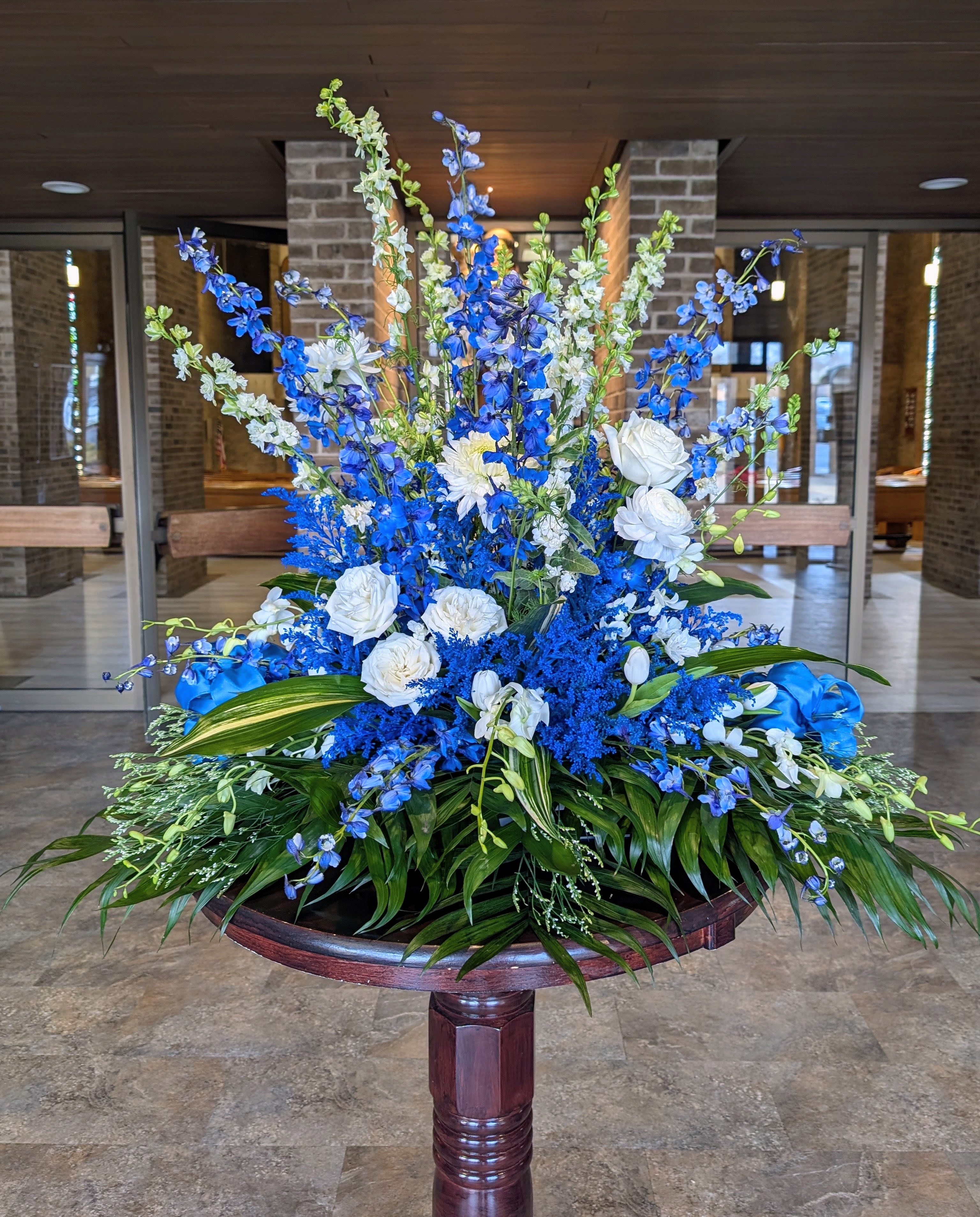
Caring for Sympathy and Memorial Arrangements
Sympathy and memorial arrangements carry a quiet and profound purpose. They are not only beautiful floral expressions, but also symbols of love, remembrance, and support. Because these flowers are often present during emotionally significant moments, caring for them with intention helps preserve both their beauty and the meaning they hold.
When sympathy flowers arrive, the first step is to place them in a cool, stable environment away from direct sunlight, heat, or drafts. These arrangements are often designed to last through a service or visitation, and temperature control can make a meaningful difference. If the arrangement includes stems in water, check the water level regularly and refill as needed using clean, cool water.
Avoid moving the arrangement more than necessary, especially if it has been designed in floral foam or a special tribute form. These designs are often delicate and carefully constructed to maintain a specific shape. If flowers begin to droop slightly, a gentle misting can help refresh them without disturbing the design.
For family members who wish to keep sympathy flowers after a service, remove any fading blooms promptly and trim stems before transferring the arrangement into a fresh vase. This small act can extend the life of the tribute and create a graceful transition from ceremony to home remembrance.
Certain flowers are especially fitting for memorial occasions because of their symbolism and quiet elegance. Lilies, roses, orchids, hydrangeas, carnations, and snapdragons are often chosen for their beauty and their ability to communicate reverence and comfort. White and soft pastel palettes remain especially meaningful, though deeper tones can also be used to reflect personality and memory.
Caring for sympathy flowers is an act of tenderness. It honors the thoughtfulness behind the arrangement and preserves the atmosphere of grace it was meant to create. In moments of loss, flowers offer a language where words may be difficult to find, and their care becomes part of the tribute itself.